 1-800-284-5074



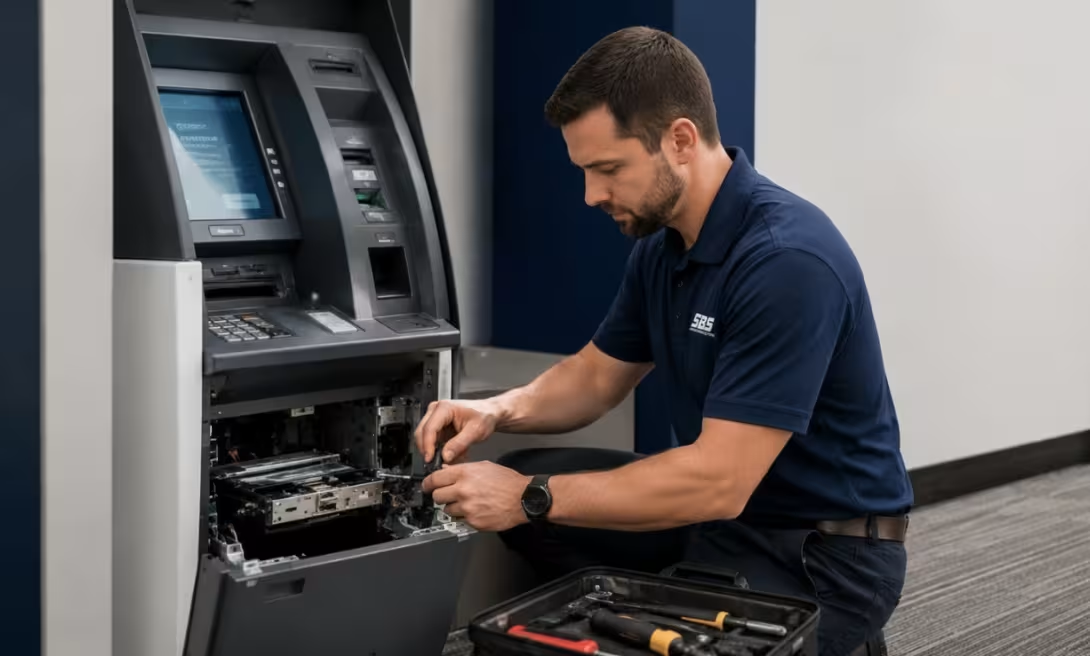
The phrase "out of order" is one of the most damaging signs a bank can display. ATMs serve as the physical, 24/7 face of your financial institution. When an automated teller machine goes offline, it immediately chips away at customer trust and drives users into the arms of competitors.
Selecting an ATM service provider is no longer a simple matter of choosing a vendor to fix paper jams and replenish cash. In a modern financial ecosystem, your provider must act as a strategic operational partner. Whether you are leaning toward an outsourced ATM-as-a-Service (ATMaaS)infrastructure or looking to optimize a multi-vendor network, here are the non-negotiable criteria your bank needs to evaluate.
1. Robust Service Capabilities and Multi-Vendor Support
Many financial institutions operate a hybrid ATM fleet composed of hardware from different manufacturers likeNCR, Diebold Nixdorf, or Hyosung. A high-tier service provider must possess the engineering expertise to support a diverse, multi-vendor environment without finger-pointing.
Advanced Hardware Fluency: Ensure the provider's technicians are trained on your specific fleet. They must handle complex hardware demands, such as integrating cardless transactions via web-based Single Sign-On (SSO) or QR code scanning—features modern consumers expect.
NextGen Feature Integration: Look for providers equipped to scale your machines into multi-functional kiosks capable of biometric logins, mobile wallet transactions, and interactive teller machine (ITM) video feeds.
2. True Uptime Metrics and Proactive Monitoring
A standard service level agreement (SLA) promising 99% uptime sounds excellent on paper, but raw percentages can hide systemic failures. A 1% downtime window during a quiet Tuesday morning is vastly different from an outage on a Friday payday afternoon.
When vetting a provider's uptime strategy, ask about the following:
Proactive vs. Reactive Maintenance: Top-tier ATM Managed Service Providers (MSPs)do not wait for a machine to break. They utilize real-time edge monitoring tools and AI analytics to track internal health metrics (like receipt printer degradation or cash dispenser rollers) to deploy field technicians before a failure occurs.
Granular KPI Tracking: Partner with a provider that measures success through customer-centric metrics—such as transaction completion rates and mean time to repair (MTTR)—rather than just broad network pings.
3. Absolute Compliance and Security Controls
ATMs are high-value targets for both physical attacks and sophisticated cyber fraud. Your service provider must be an absolute authority on evolving international compliance standards.
PCI DSS and Hardware Security: The provider must fully conform to the Payment Card Industry Security Standards Council (PCI SSC) mandates, ensuring end-to-end AES-256 encryption of cardholder data across the network. They must actively manage firmware patches to protect against "black box" jackpotting attacks, where criminals attempt to bypass the ATM's core processor to communicate directly with the cash dispenser.
Physical & Environmental Defense: Ensure their managed terminals support advanced physical controls, including specialized anti-skimming devices, silent alarms, and vibration or thermal sensors to detect physical vault tampering.
Accessibility Laws: Hardware and software must remain strictly compliant with regional accessibility laws, such as the Americans with Disabilities Act (ADA) or the European Accessibility Act (EAA). This includes maintaining speech-to-text audio outputs via headphone jacks, tactile keypad mapping, and high-contrast screens.
4. Comprehensive Managed Services & Cash Optimization
Managing an ATM involves balancing the cost of secure transport against the cost of dead capital. Idle cash sitting in an ATM cassette does not earn interest, yet running out of funds entirely destroys customer satisfaction.
The right partner should provide end-to-end management, which includes:
AI-Driven Cash Forecasting: Using historical transaction volumes, local holidays, and community payroll cycles to predict the exact cash loads needed per machine, minimizing cash-in-transit (CIT) fees.
Airtight Electronic Auditing: Implementing networked electronic locks linked to identity management systems. This creates time-bound, encrypted digital access tokens for CIT crews and logs every opening event to a central compliance dashboard.
5. Transparent Support and Escalation Models
When a critical branch ATM fails, you need a clear, transparent line of communication—not a generic call center queue.
Evaluate the provider's underlying support framework:
Centralized Ticketing and Escalation: Your internal operations managers must have access to real-time service management tools. These tools should track the live status of every work order, provide transparent notes from field technicians, and automatically escalate unresolved issues to higher management tiers based on strict SLA countdown timers.
Help Desk Availability: Ensure their technical support team operates a true 24/7/365 security and operations center capable of performing remote diagnostic reboots to clear minor logic faults instantly.
Summary Checklist for Bank Executives
| Evaluation Pillar | What to Look For |
|---|---|
| Fleet Capabilities | Proven experience in a multi-vendor environment; capability to support cardless/biometric integrations. |
| Uptime Philosophy | Predictive, AI-driven component monitoring; commitments to peak-hour transaction completion metrics. |
| Compliance Proofs | Verifiable PCI DSS compliance certifications; full ADA/EAA accessibility hardware configurations. |
| Managed Operations | Data-driven cash optimization modeling; centralized IoT security monitoring hubs. |
| Support Model | 24/7/365 immediate engineer access with real-time digital tracking dashboards. |