 1-800-284-5074



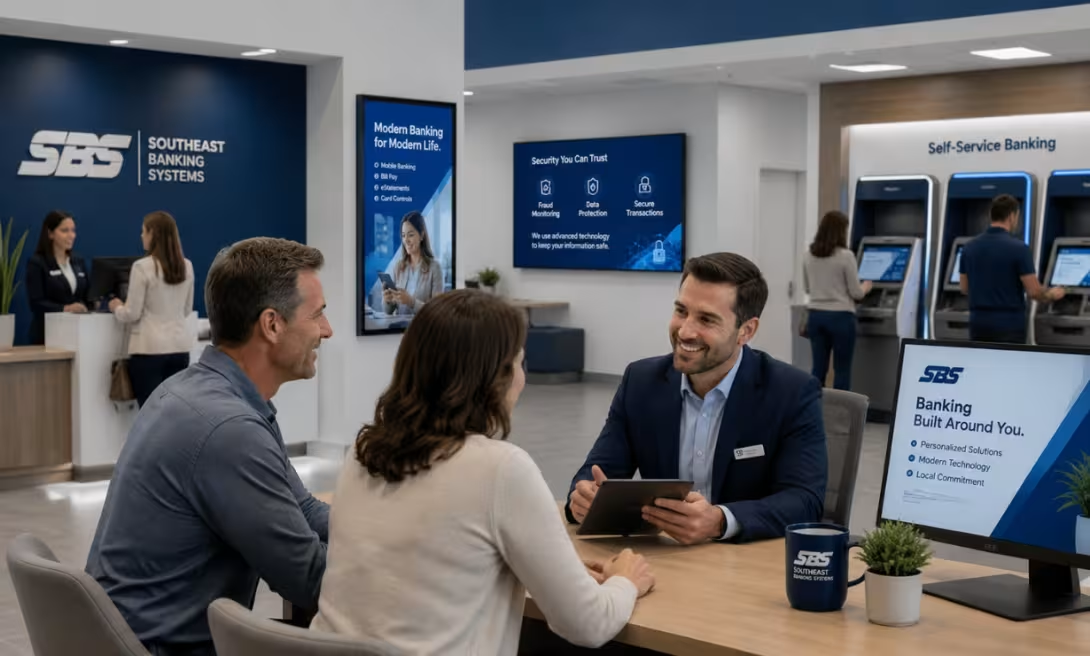
The retail banking landscape has moved past the binary choice between digital-only apps and traditional brick-and-mortar setups. Financial institutions face a unique challenge: consumers demand the convenience of mobile platforms alongside the security and human reassurance of a physical branch. The industry has responded with the phygital branch—a seamless blending of physical brick-and-mortar spaces with hyper-connected, smart technologies.
Legacy infrastructure and disconnected processes create operational friction, elevate overhead, and introduce security vulnerabilities. Modernizing these banking operations requires transitioning away from traditional transaction counters toward intelligent, automated, and secure environments.
This guide breaks down the core technologies driving banking modernization and outlines a step-by-step framework to upgrade your infrastructure.
1. Core Technological Innovations
Modern banking operations prioritize automation, proactive security, and spatial intelligence. The goal is to eliminate manual cash handling, secure the physical and digital perimeters simultaneously, and leverage data to optimize the branch footprint.
High-Speed Currency Discriminators and Teller Cash Recyclers
Cash remains an essential element of banking operations, but manual counting, sorting, and verification can impact employee productivity. Modern financial centers address this by utilizing high-speed currency discriminators and Teller Cash Recyclers (TCRs) equipped with advanced multi-sensor arrays.
Leading manufacturers like Glory Global design hardware that automates end-to-end cash processing right at the teller line. Real-world deployments show that automating these workflows can save tellers up to 78 minutes per day (Source: Glory Global Case Study), giving staff more time to focus on high-value client advisory roles.
Multi-Sensor Counterfeit Detection: Modern systems use simultaneous ultraviolet (UV), magnetic (MG), infrared (IR), and optical character recognition (OCR) scanning to flag sophisticated counterfeit notes instantly (Source: ResearchGate Study).
Fitness Sorting: Devices automatically evaluate the physical quality of banknotes, instantly separating crisp currency suitable for ATM loading from soiled or torn notes destined for central bank returns.
Airtight Audit Trails: Discriminators capture and log the serial number of every bill processed. This real-time tracking links specific physical notes to specific transactions, strengthening Anti-Money Laundering (AML) controls.
Networked Electronic Locks and IoT Access Control
Managing physical keys across a distributed branch network creates operational risks and vulnerabilities. Forward-looking institutions are transitioning to networked smart locks integrated directly with centralized Identity and Access Management (IAM) platforms.
Dynamic, Time-Bound Credentials: Maintenance teams, cash-in-transit partners, and internal staff receive encrypted, temporary digital access tokens sent directly to secure mobile applications.
Instant Access Revocation: If a device is compromised or an employee leaves the organization, administrator panels can instantly revoke access across vaults, server spaces, and cash drawers worldwide.
Automated Audit Logging: Every unlock event, unauthorized access attempt, and prolonged door-open status is instantly logged to a central compliance dashboard, creating a transparent security history.
Smart Security and Edge Video Surveillance
Traditional CCTV setups operate reactively, recording incidents for post-event investigation. Modern security strategies rely on cloud-connected smart surveillance systems running computer vision and artificial intelligence models directly at the network edge.
Behavioral Anomaly Detection: Edge-enabled cameras monitor branches in real time to spot atypical movement patterns, loitering around automated teller machines (ATMs), or unauthorized physical presence outside business hours.
Multilevel Biometric Validation: High-security server rooms and vault facilities combine encrypted physical badges with real-time, privacy-compliant facial recognition and fingerprint scanning before granting access.
Environmental Sensor Integration: Internet of Things (IoT) nodes track environmental variables—such as localized temperature drops, seismic vibrations from vault tampering, or acoustic signatures like breaking glass—to alert security teams before a physical breach occurs.
Predictive AI-Powered Analytics
Operational optimization requires shift planning and resource tracking based on proactive data insights. Predictive machine learning models analyze complex data streams to streamline branch management.
Cash Inventory Optimization: Algorithms evaluate historical transaction patterns, local community events, and seasonal payroll trends to forecast exact cash needs per branch and ATM terminal. This minimizes idle cash holdings while avoiding unexpected shortages.
Workforce Capacity Planning: Predictive models forecast branch foot traffic down to specific hours, allowing managers to align staffing schedules with peak demand and reduce waiting times.
Spatial Optimization: Anonymized video metadata generates spatial heatmaps that show how customers move through a branch. These insights help guide the optimal layout of self-service interactive teller machines (ITMs) and marketing displays.
Fraud Mitigation: Institutions deploy AI frameworks to flag transaction and account anomalies. For instance, the Reserve Bank of India (RBI) launched its MuleHunter.AI solution across 26 banks to detect and isolate fraudulent mule accounts before illicit funds can be shifted.
2. Structural Pillars of a Modern Branch Ecosystem
Upgrading specific branch hardware cannot deliver a full return on investment if the underlying systems remain isolated. A modernized banking operation rests on three foundational structural pillars.
Modern Operational Architecture
- Hybrid Core Ecosystem (SaaS Scaling + Secure On-Premises)
- Unified IoT Management (Centralized Physical Security Hub)
- Real-Time Data Pipeline (Zero-Latency API Ledger Sync)
The Hybrid Core Ecosystem
Moving completely to the public cloud is rarely feasible or permissible due to strict data-residency and compliance laws. Instead, the modern standard is a structured hybrid model:
Public Cloud (SaaS): Powers customer-facing mobile applications, client portals, and resource-heavy predictive analytics engines where rapid scalability is key.
Secure Private Infrastructure/On-Premises: Houses core transactional ledgers, identity databases, and cryptographic keys to isolate critical financial data from external networks.
Unified IoT Device Management
Networked locks, smart cameras, and currency counters should not operate on isolated software platforms. Connecting these devices to a single, secured IoT segment monitored by a centralized platform allows institutions to build automated response workflows. For example, if an unauthorized entry is detected at a vault door, the platform can lock down adjacent exit pathways, re-route camera feeds to the Security Operations Center (SOC), and issue immediate mobile alerts. Additional sources: IoT Access Control Survey, Banking IoT Security
Real-Time Event Streaming Pipelines
End-of-day batch processing can result in operational lag. Modern infrastructure uses real-time event-streaming message brokers. When a customer makes a cash deposit via a teller cash recycler, the transaction details stream instantly to the ledger. This updates customer balances on mobile apps within milliseconds and ensures fraud monitoring systems analyze the data instantly.

3. Step-by-Step Modernization Framework
Transforming a legacy banking environment requires a phased approach to prevent operational downtime and maintain continuous client service.
Phase 1: Operational and Infrastructure Audit
Before introducing new hardware, map your current operational and technical baseline.
Analyze Workflow Bottlenecks: Quantify the time tellers spend manually counting bills, balancing drawers, and managing vault handoffs.
Review Access Control Points: Document every mechanical lock, physical vault key, and alarm system. Evaluate how access logs are recorded and how often entry codes are updated.
Assess Network Capacity: Verify that existing branch internet lines have the necessary bandwidth to support high-definition video feeds alongside real-time transactional API traffic.
Phase 2: Upgrading Network Segments
Establish a resilient network foundation capable of handling modern connected devices securely.
Implement Network Micro-segmentation: Isolate the branch network into separate, dedicated zones. Guest Wi-Fi networks, employee systems, IoT security devices, and core transaction terminals should run on isolated virtual local area networks (VLANs).
Deploy Zero Trust Network Access (ZTNA): Transition away from traditional perimeter security models. Every connected device—whether an electronic lock or a cash counter—must dynamically authenticate and prove its security posture before communicating with the broader network. Additional sources: RBI Guidelines, UK NCSC
Phase 3: Deploying Smart Branch Hardware
Install automated physical hardware to reduce operational friction and improve security.
Install Networked Electronic Locks: Upgrade mechanical locks on vaults, cash bins, and telecommunication closets to IP-enabled smart locks managed through a centralized access system.
Deploy Cash Recyclers and Discriminators: Equip high-volume teller windows and back-office settlement rooms with smart cash handling systems to automate counting, validation, and balancing workflows.
Position Edge Surveillance Cameras: Replace legacy security cameras with smart, AI-capable video units positioned at entryways, vault doors, and transactional areas.
Phase 4: Activating the Analytics Layer
Connect the data streams from your branch hardware to an analytical engine to surface operational insights.
Centralize Device Telemetry: Monitor health metrics from ATMs, cash recyclers, and smart locks on a single dashboard to schedule predictive maintenance and prevent hardware downtime.
Optimize Resource Distribution: Leverage machine learning models to analyze foot traffic, transactional trends, and cash volumes to automate staff scheduling and cash transit planning.
4. Addressing Implementation Challenges
Modernization initiatives often run into technical and organizational hurdles. Managing these proactively helps keep projects on track.
| Modernization Challenge | Root Cause | Mitigation Strategy |
|---|---|---|
| Legacy Integration Bottlenecks | Core accounting systems often lack native API connectivity. | Deploy secure middleware platforms to translate modern JSON API calls into traditional ISO 8583 banking message formats. |
| Expanded Cyber Attack Surfaces | Increasing the number of IoT devices introduces new entry points. | Ensure all connected locks, cameras, and cash discriminators feature hardware-level encryption via Trusted Platform Module (TPM) chips. |
| Staff Adaptation Friction | Personnel may resist changing long-standing branch workflows. | Deploy touch-screen interfaces for cash hardware, automate end-of-day balances, and upskill teams to focus on customer relationship management. |
5. Summary Checklist: The Modernized Operational State
An institution's branch modernization is complete when operations meet these standards:
Keyless Operations: Physical keys are phased out, replaced by dynamic, identity-verified mobile credentials and biometric validation nodes.
Automated Cash Handling: Staff do not manually count bills; smart cash discriminators and recyclers handle counting, verify authenticity, and update ledgers automatically.
Proactive Security Alerts: The branch security ecosystem automatically spots behavioral anomalies and access violations, alerting personnel before an incident escalates.
Data-Driven Management: Branch scheduling, cash transit volumes, and ATM inventory levels are guided by predictive AI models.
Updating your branch infrastructure helps protect your institution against financial crime, reduces operational overhead, and creates a flexible, future-proof foundation for the changing financial world.