 1-800-284-5074



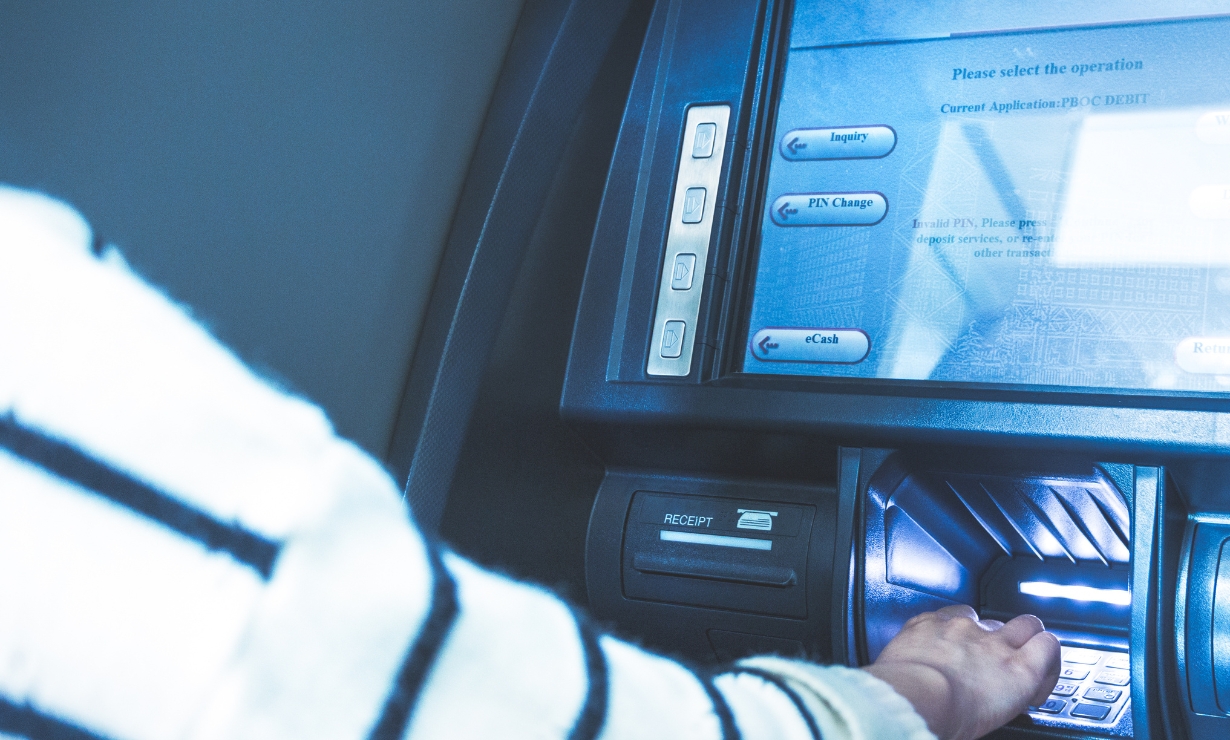
The automated teller machine (ATM) remains a core pillar of retail banking, providing essential everyday cash accessibility. However, this accessibility also makes it a primary target for financial criminals. According to the Yahoo Finance Payment Card Skimming Market Report, terminal-related fraud attacks are seeing a significant rise globally.
As fraudsters shift from simple physical skimming to complex, AI-driven cash-out schemes, banking security teams must pivot away from reactive monitoring. Protecting your fleet requires a layered defense model that unifies physical edge security, real-time behavioral surveillance, and transaction analytics.
The Evolution of the Threat Landscape
Historically, ATM fraud relied on low-tech, localized tactics like manual card trapping or simple silicone keypad overlays. Modern criminal networks deploy industrialized tools designed to bypass static defenses.
The primary threat vectors facing banks include:
- Deep Insert Skimming: Ultra-thin magnetic-stripe harvesters hidden completely inside the card reader slot, making them entirely invisible to the naked eye.
- Jackpotting (Black-Box Attacks): Physical breaches where attackers disconnect the ATM's internal core computer and attach an external device running unauthorized software to force the machine to dispense all its cash.
- Mule Account Shifting: Fraud networks use cash-out strategies involving automated teller networks to rapidly withdraw illicit funds obtained through digital phishing scams.
Layered ATM Defence Framework
1. Physical Edge Protections and Intelligent Sensors
Relying on security guards or occasional physical branch checks leaves standalone or off-premise ATMs vulnerable. Modern physical defense requires building active, sensor-driven perimeters directly into the ATM enclosure.
Active Anti-Skimming Signal Jammers
Modern card slots are equipped with active electromagnetic anti-skimming modules. When a card enters the bezel, the module generates a localized, shifting electromagnetic signal disruption. This noise distorts any data attempts from overlay card readers while allowing the internal EMV chip reader to process the transaction securely.
Environmental and Kinetic Telemetry Nodes
ATM enclosures should feature integrated vibration, tilt, and heat sensors. If a criminal uses a torch, drill, or heavy tools to breach an outer panel or access the internal computer box, these sensors trigger an immediate alert to the Security Operations Center (SOC).
The system can execute automated defense protocols, such as isolating the network switch or erasing cryptographic key storage.
2. Edge-Based AI Video Analytics
Standard digital video recorders (DVRs) merely capture footage for post-incident investigations. Modern branch monitoring relies on cloud-connected edge cameras equipped with advanced computer vision models trained on physical risk profiles.
Loitering and Pattern Recognition
Systems likeAgrex Technologies ATM Analyticsrun continuous perimeter checks to flag individuals lingering near a machine for extended periods without initiating a transaction. This behavioral monitoring helps identify bad actors mapping out terminal hardware or prepping an anti-skimming installation.
Proximity and Shoulder-Surfing Alarms
Computer vision models analyze the physical space surrounding an active transaction. If a secondary individual enters the defined privacy perimeter while a user enters their credentials, the edge processor can display an on-screen warning or flag the session for a real-time risk check.
Tamper and Lens Obfuscation Identification
If an attacker paints over a camera lens, cuts the main feed, or applies an unauthorized plastic overlay to the machine's front, the system immediately recognizes the sudden structural shift. It packages the preceding video clip and transmits a high-priority alarm directly to field teams.
3. Real-Time Transactional Analytics
Fraud networks frequently leverage legitimate credentials acquired through account takeovers (ATO) or social engineering. Because these transactions appear valid on paper, static, rule-based systems often fail to catch them.
Protecting accounts requires analyzing user actions as they happen.
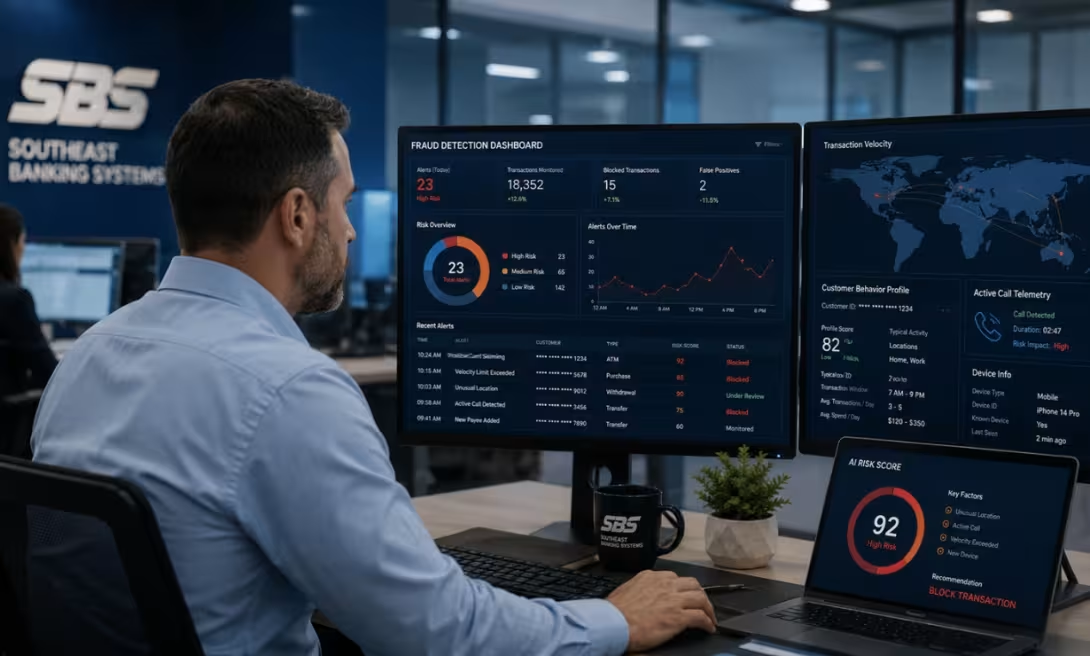
| Analytical Core | Operational Strategy | Practical Use Case |
|---|---|---|
| Behavioral Profiling | Builds a baseline of normal user activity based on timing, common locations, and past withdrawal patterns. | Flags an immediate maximum cash withdrawal occurring hundreds of miles away from a customer's typical location. |
| "Active Call" Telemetry | Detects if a customer is on an active mobile phone call while interacting with the terminal. | Interrupts the transaction if the user is being coached by a social engineering scammer. |
| Velocity Tracking | Monitors rapid card use across different geolocations. | Automatically blocks sequential transactions that violate realistic physical travel limits between machines. |
Advanced transaction engines, such as UMCA Real-Time AI Fraud Prevention, process these data signals simultaneously. The engine returns an approve, challenge, or block decision in under 30 milliseconds, minimizing transaction lag for legitimate users.
4. Implementation Best Practices for Financial Institutions
Step 1: Enforce Network Micro-segmentation and Hardening
An ATM should never communicate over an open corporate network. Segment your fleet onto a separate virtual local area network (VLAN) running Zero Trust Network Access (ZTNA) protocols.
Ensure hard drives use full disk encryption (FDE) and restrict USB ports via BIOS password locks to prevent unauthorized physical connections.
Step 2: Implement Adaptive Authentication Checkpoints
Integrate the ATM fleet with your mobile banking app infrastructure. For high-risk or large cash withdrawals, require an out-of-band step, such as a biometric confirmation or a secure push notification. This layer helps ensure the physical cardholder is actually present at the machine.
Step 3: Participate in Shared Intelligence Ecosystems
In the real banking world, the definitive platform for sharing real-time, anonymized ATM threat vectors, fraud trends, and mule account indicators is the FS-ISAC (Financial Services Information Sharing and Analysis Center).
Checklist: Evaluating Your ATM Security Baseline
Review your current fleet deployment against this foundational security checklist:
- Active Jamming Deployed: All terminal bezels utilize active electromagnetic signal jammers to disrupt external skimmers.
- Edge Computer Vision Active: Security feeds analyze user proximity, flag loitering, and spot physical machine tampering automatically.
- Sub-30ms Risk Decisions: Financial transaction monitoring evaluates user behavioral profiles in real time before releasing cash.
- Hardware Disk Encryption: Core computer drives inside the terminal are fully encrypted and locked down against external USB boot attempts.
- Cross-Channel Identity Checks: High-value transactions trigger mobile push alerts or biometrics to prevent cash-outs from stolen cards.